Radon Awareness:
Why White Crane Recommends Testing and Mitigation
When Susan Denk, founder of White Crane Design:Build, tested for radon at her Minneapolis house about ten years ago, the results came back in the safe zone—well under the recommended levels. Like many homeowners, she checked that box off her mental list, and moved on with life. But several years and a few remodels later—including one major renovation—Susan decided to retest.
This time, the results told a very different story.
“The second test came back at over seven, which is absolutely in the unhealthy range for radon,” Susan recalls. “It really was distressing to me that I hadn’t been more consistent in our testing of radon at the house.”
“You can’t smell it, you can’t see it, so you don’t know that you’re being impacted by it unless you test for it.”
Understanding radon: The silent threat
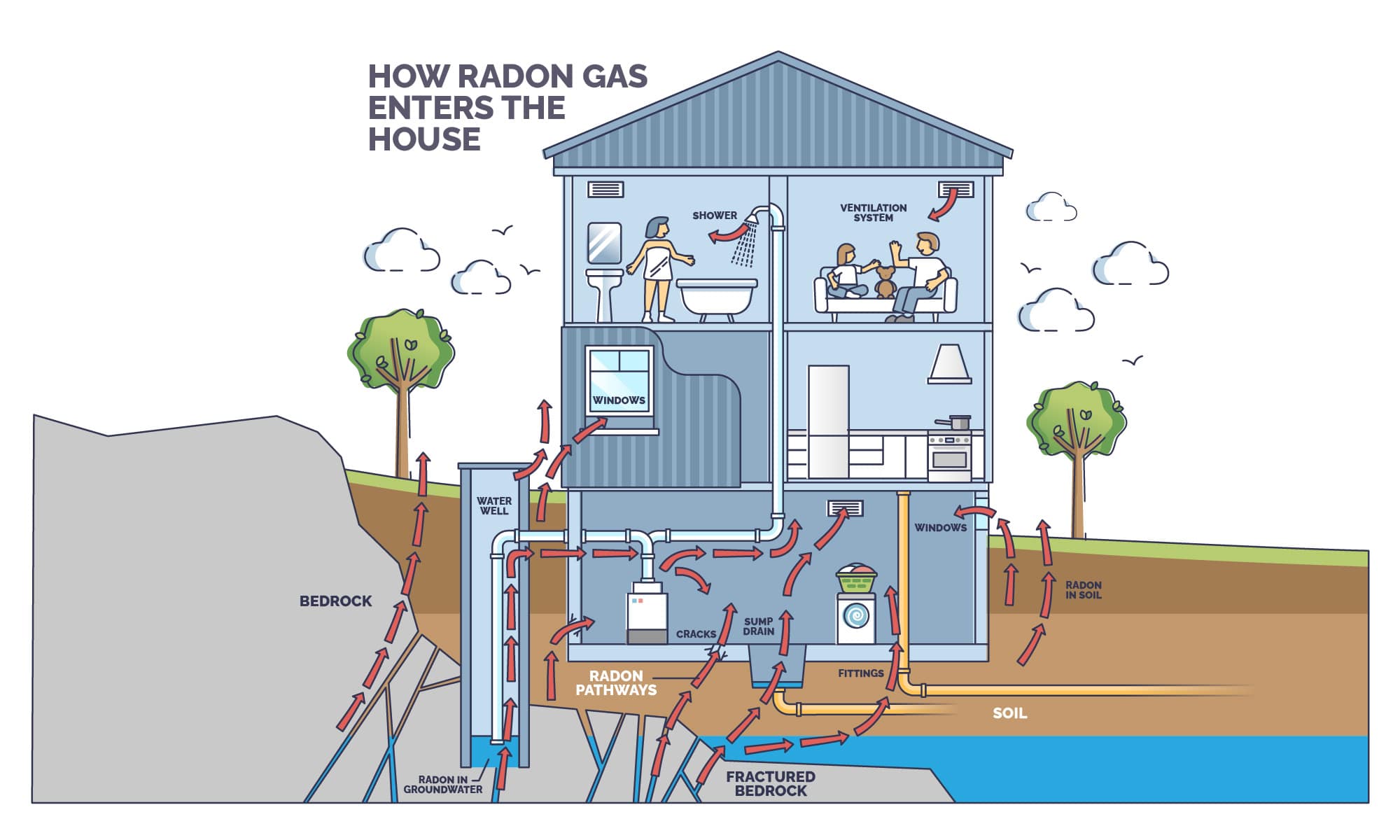
Radon is a naturally occurring gas that seeps up from the soil beneath homes. While everyone is exposed to radon at some level, concentration is what matters. When levels rise above four picocuries per liter, it becomes dangerous.
What makes radon particularly concerning is its invisibility. “You can’t smell it, you can’t see it, so you don’t know that you’re being impacted by it unless you test for it,” says Susan.
And the stakes are high—radon is the second leading cause of lung cancer in the United States, affecting thousands of people every year. Yet it remains something that isn’t widely discussed or understood by homeowners.
“It makes sense to test for radon. And testing once isn’t enough—it needs to be an ongoing practice, especially during and after renovation work.”
Why radon levels change over time
Susan’s experience revealed an important lesson: radon levels can change over time, especially when soil is disturbed around a home.
“As it turns out, as you disturb soil by doing things like putting on additions, or adding a drain tile in the basement, you can go from ‘Okay, we’re just fine’ to ‘This is dangerous,’” says Susan.
White Crane’s response: Making radon mitigation standard practice
After experiencing elevated radon levels in her own home, Susan brought the issue to White Crane’s leadership team. Their response was immediate and comprehensive.
“Our leadership team took it upon themselves to say, ‘We need to carry more of a standard with this very dangerous risk.”
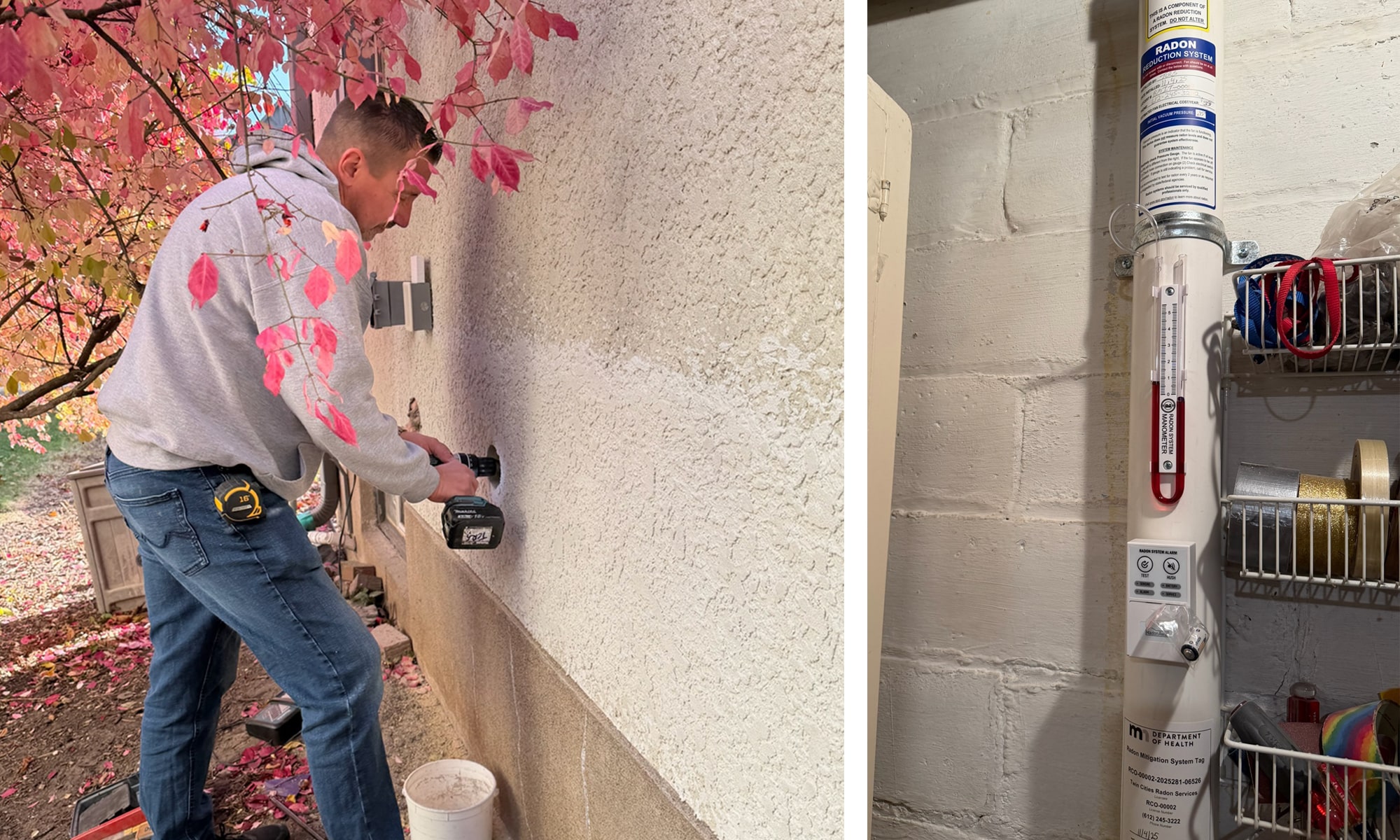
Now White Crane tests for radon as a matter of course on all projects where major remodeling occurs and soil is disturbed. And, even though building codes for older homes don’t require radon mitigation systems, if White Crane is doing work in a lower level, they install one anyway—not as an optional add-on, but as standard practice.
“We remodel homes, so we disturb dirt all the time. Our goal is to both educate the folks we serve—and then also to be sure that when we leave somebody’s home, we leave it safe.”
Why Minnesota homeowners need to pay attention
As it turns out, Minnesota’s geography makes radon awareness particularly critical.
“Because of our particular topography here in Minnesota, we have, on average, more than other parts of the country, and so we’re more vulnerable as a population,” Susan says.
This is especially relevant in lower-level remodels, a popular project for White Crane’s clients in older Minneapolis and St. Paul homes. “A newly finished basement can create wonderful new living spaces—but only if the air quality is safe,” says Susan.
The cost of a radon mitigation system typically runs between $1,500 and $3,000. When installed during a remodel, those costs can often be minimized since the crew is already on site and working.
The good news is: After installing a mitigation system in her own home, Susan’s radon levels dropped below two.
What homeowners should know
For homeowners in older homes, particularly in the Twin Cities area, radon testing is essential. The American Lung Association lists testing your home for radon as number four on their list of ten ways to help yourself stay healthy, noting that while radon is the second leading cause of lung cancer, “it can be easily controlled.”
And for anyone planning a remodel that involves foundation work, an addition, or finishing a lower level, radon should be part of the conversation from the start.
As Susan says, “This is a must-do for us to feel safe, and for us to feel confident that we’re leaving people in a safe environment.”
For more information about radon testing and mitigation, see these resources at the Minnesota Department of Health and the American Lung Association. January is Radon Action Month—a perfect time to test your home.
